
It's a fair question we get on a lot of estimates: if paint is paint, why not use the leftover interior gallon on the porch railing, or the exterior stuff on a bedroom wall? The short answer is that the two are formulated for completely different lives. One has to survive weather; the other has to live comfortably alongside you indoors. Understanding what's actually different inside the can makes it clear why swapping them is a mistake.
Same basic recipe, very different ingredients
Every can of paint is built from the same four building blocks: pigment for color, a binder (or resin) that holds everything together and sticks it to the surface, a liquid carrier that lets it spread, and additives that fine-tune how it behaves. Interior and exterior paints share that framework, but the binder and the additives are chosen for entirely different priorities, and that's where the real difference lives.
The binder is the heart of it
The resin is what determines how a paint film ages. Exterior paints use binders engineered to stay flexible across big temperature swings. Siding expands in the July sun and contracts on a January night, and an exterior film has to stretch and relax with it hundreds of times a year without cracking. Interior binders don't need that elasticity (indoor surfaces barely move), so they're tuned instead for a hard, smooth film that resists scuffs and takes repeated cleaning.
The additives that make exterior paint weatherproof
This is where exterior paint earns its keep. Because it has to defend a surface against everything the sky throws at it, it's loaded with additives an interior paint simply doesn't carry:
- Mildewcides. Outdoor surfaces stay damp and grow mildew; exterior paint includes agents that resist it. Interior paint has little or none, because you don't want those chemicals off-gassing in a closed room.
- UV blockers. Sunlight breaks down resins and pigments, so exterior paint is packed with UV-stabilizing additives to slow fading and chalking. At Colorado altitude, where UV is more intense, that protection matters even more.
- Flexibility agents. Extra plasticizers and specialized resins keep the film pliable through freeze-thaw cycles so it moves with the surface instead of splitting.
Interior paint skips all of that and optimizes for the things that matter inside: scrubbability so you can wipe crayon and fingerprints off a hallway, a smooth low-glare finish, and increasingly low odor and low VOC so the room is livable again within hours instead of days.
Why you can't just swap them
Interior paint outdoors fails fast
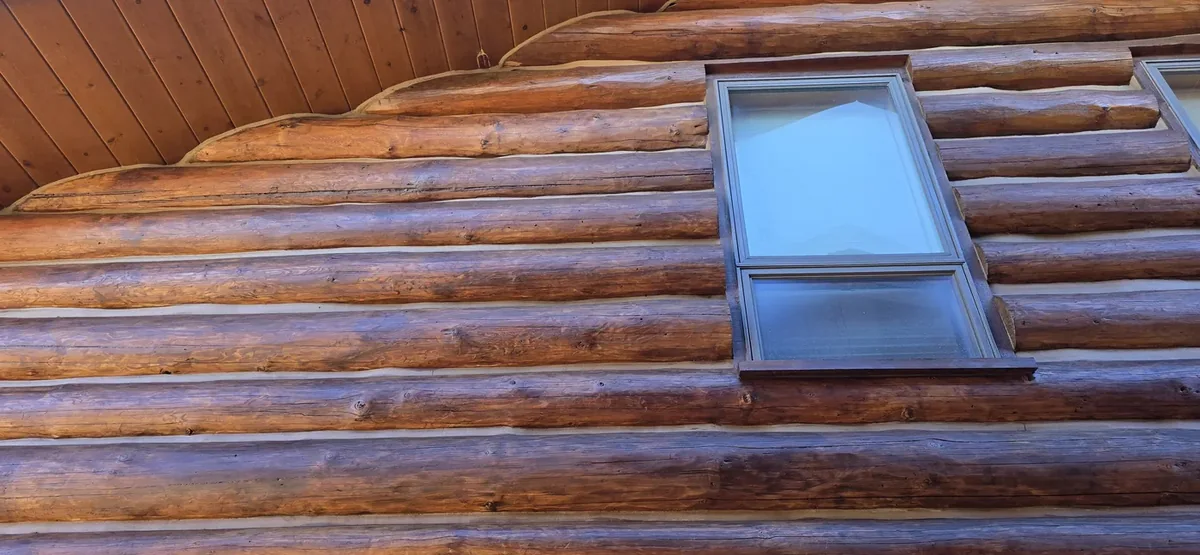
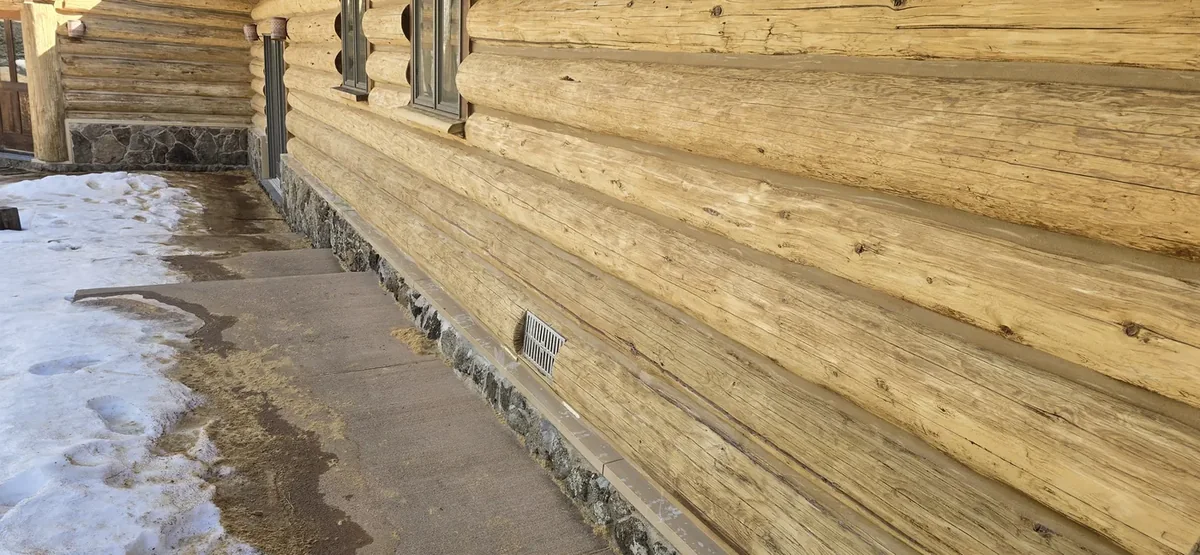
Put interior paint on an exterior surface and it has none of the armor it needs. With no UV blockers it fades and chalks within a season or two; with no mildewcide it grows dark blotches wherever moisture sits; and with a rigid binder that won't flex, the first hard freeze-thaw cycle starts cracking and peeling it off the wall. What looks like a money-saving shortcut turns into a full re-do, usually within a year.
Exterior paint indoors is a bad idea too
Going the other direction is less obviously wrong but still a poor choice. Exterior paint is built to cure in open air, so indoors it can off-gas its additives and mildewcides into a closed room for far longer, leaving a lingering odor. Those same additives can make it softer and slower to fully harden inside, and its finish is formulated for weather resistance rather than the easy, repeated scrubbing you want on interior walls. Cleanup and touch-ups are harder, and you gain nothing for the trouble.
Choosing the right sheen
Once you're using the correct type of paint, sheen is the next real decision, and it's about durability as much as looks. Inside, flat and matte hide wall imperfections beautifully but are harder to clean, so they suit low-traffic ceilings and bedrooms; eggshell or satin is the everyday choice for living areas and hallways; and semi-gloss goes on trim, doors, kitchens, and bathrooms where you want moisture resistance and a wipeable surface. Outside, a satin or low-lustre body finish sheds dust and resists UV without spotlighting flaws, while semi-gloss on trim, railings, and doors adds durability where the house takes the most wear.
Prep still matters more than the paint
Here's the part that surprises people: no matter how good the paint or how right the choice, the surface underneath decides how long it lasts. Indoors that means filling and sanding, spot-priming patches and stains, and cutting clean lines so the finish looks sharp. Outdoors it means washing off chalk and grime, scraping everything loose, caulking gaps, and priming bare spots so the coating actually bonds. We say it constantly because it's true: a premium coating over bad prep will fail before a budget coating over honest prep. If you want the full outdoor version, our guide to the best time to paint an exterior in Colorado walks through timing and weather, which are part of prep in the mountains.
The short version
Interior and exterior paint aren't graded versions of the same product. They're built for different worlds. Exterior paint trades indoor comfort for weatherproofing: flexible binders, UV blockers, and mildewcides. Interior paint trades weather resistance for a hard, washable, low-odor finish you can live with. Match the paint to the location, choose a sheen that fits the room or surface, and give it real prep, and you get a finish that holds up.
Related services: handling both sides of the house is the core of our interior and exterior painting service: right product, right prep, inside and out. If you're weighing a project and aren't sure what a surface needs, get a free estimate and we'll take a look in person.