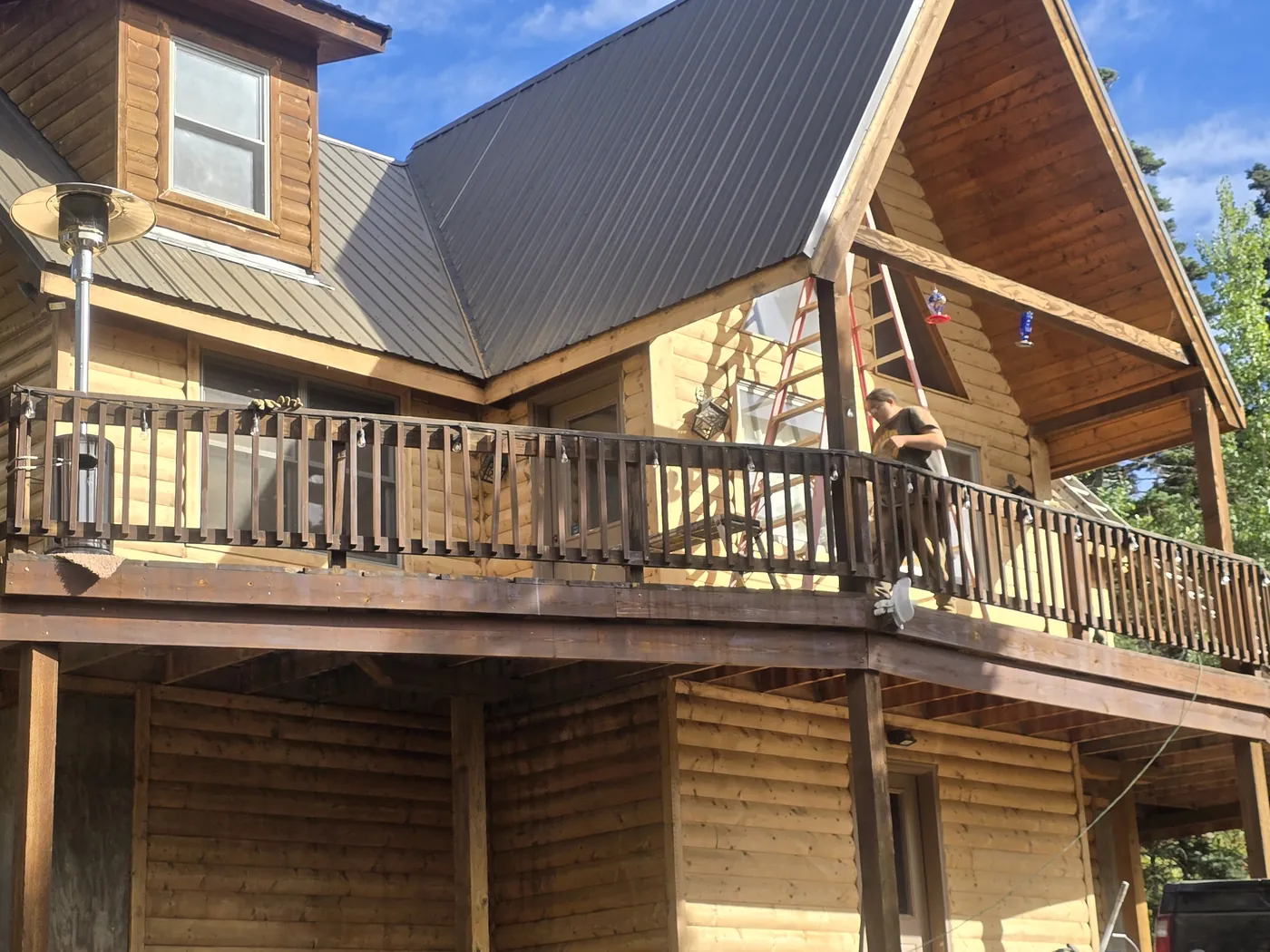
Media & corn-cob blasting
A soft, biodegradable blast medium lifts failed stain, mildew, and gray fibers out of the log's checks and profile without gouging the wood, reaching where sanding can't.

Blasting, borate, chinking, rot repair, and premium stain systems that bring tired log walls back to life, and keep them protected for years.
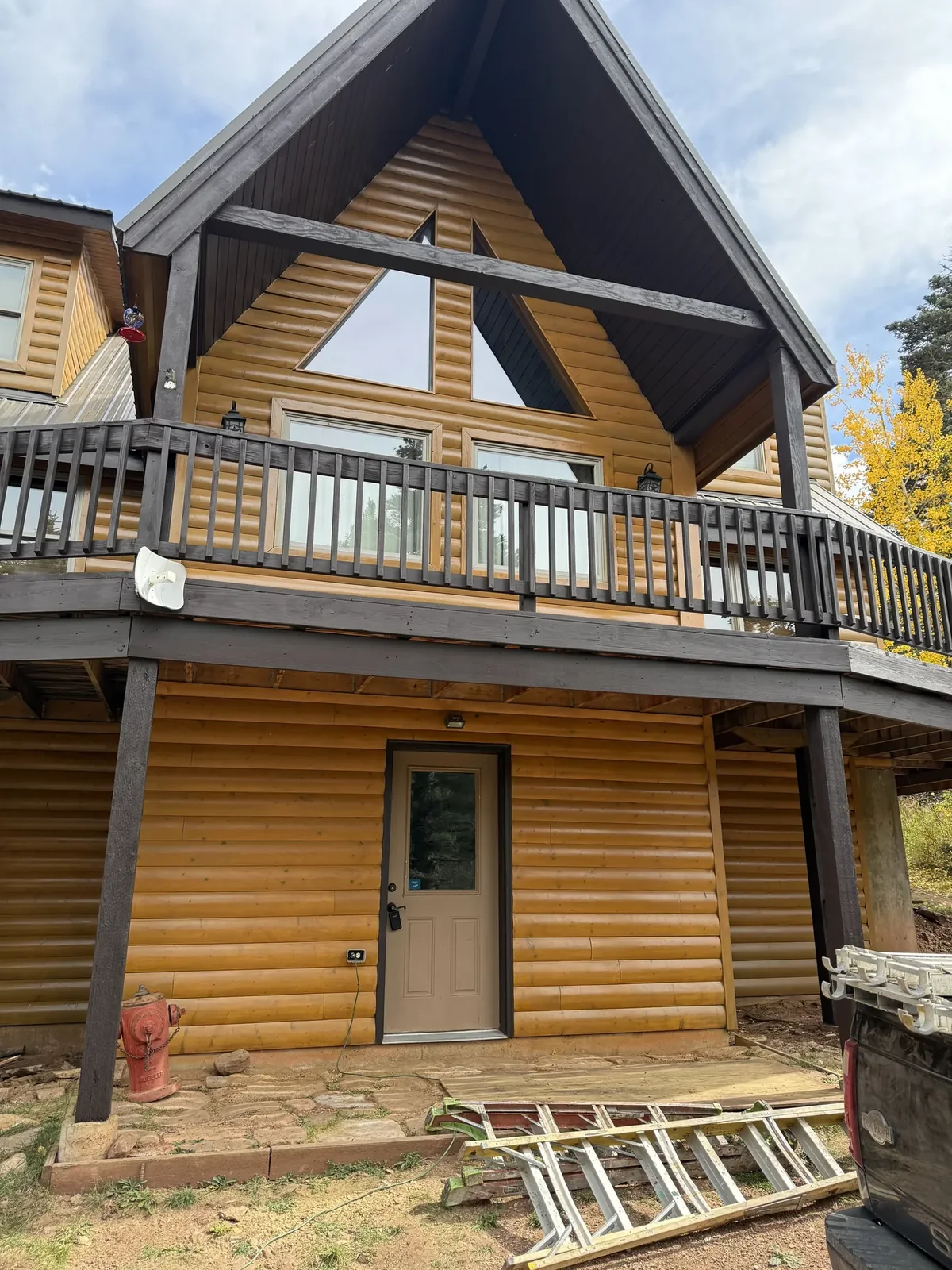
Around Cuchara, La Veta, and the rest of Huerfano County, log homes are part of the landscape, and they take a beating from the same mountains that make them beautiful. Restoring them well is what we're known for.
A log home isn't a house you can simply repaint. The logs are structural, they move with the seasons, and they need a coordinated system of surface prep, preservative, sealant, and stain working together. We handle the whole restoration in the right order, so nothing gets trapped, skipped, or sealed over a problem.
A complete restoration is a sequence of specialized steps. Here's what we bring to a log home, from bare-wood prep to the finish coat.
A soft, biodegradable blast medium lifts failed stain, mildew, and gray fibers out of the log's checks and profile without gouging the wood, reaching where sanding can't.
After blasting, the logs are washed and neutralized to remove residue and even out tone, giving the stain system a clean, receptive surface to bond to.
With the wood bare and receptive, we apply a borate preservative that penetrates the logs to guard against wood-boring insects, fungal decay, and rot.
Flexible chinking and backer rod seal the gaps between logs, while energy-seal caulking closes checks and joints, cutting drafts, blocking water, and lowering heating bills.
Localized decay is consolidated with epoxy or cut out and replaced with matching timber. Full log replacement is reserved for the rare cases of true structural damage.
A film-forming or penetrating log stain system goes on in coordinated coats, finished with a clear top coat that adds UV defense, sheen, and easier future maintenance.
Order matters on a log home. Each stage sets up the next, and skipping steps is where most failed restorations go wrong.
We walk the whole structure, checking for rot, insect damage, failed chinking, and problem walls, then map the scope.
The logs are blasted back to sound, bare wood and washed clean, exposing anything that needs repair.
Borate preservative is applied and any rot is repaired or replaced while the wood is open and accessible.
Chinking, backer rod, and energy-seal caulking close the gaps and checks that let air and water in.
The stain system and clear top coat go on in coordinated coats for lasting color and protection.
Log stains are their own category, engineered for wood that expands, contracts, and takes direct mountain sun. There are two families, and the right choice depends on your logs, your exposure, and how you want to maintain them.
These build a durable, breathable film on the log surface that delivers rich color and strong UV and moisture protection. They give the most uniform look and the longest intervals between full recoats, and they pair well with a clear top coat that takes the wear and can be refreshed on its own.
Penetrating stains soak into the wood and wear by gradually thinning rather than peeling, which keeps maintenance coats simple. They're a good fit for logs where a natural, matte look and easy re-application matter more than a built-up film.
Over either system, a clear top coat adds a sacrificial layer of UV protection and sheen. When the walls need attention down the road, refreshing the top coat is often all it takes, far less work than stripping and restaining.
The southern Colorado high country is hard on log walls. Intense UV at altitude breaks down the surface fibers and fades the wood to a lifeless gray. Snow piles against lower courses and melts into every unsealed check.
Once moisture gets in and can't get out, rot and fungal decay follow, and wood-boring insects are quick to move into softened timber. That's the cycle a real restoration interrupts: blast away the failed surface, treat the bare wood, seal the gaps, and lock it all in with a stain system built to stand up to sun and weather. Do it once, do it right, and keep it going with timely maintenance coats.
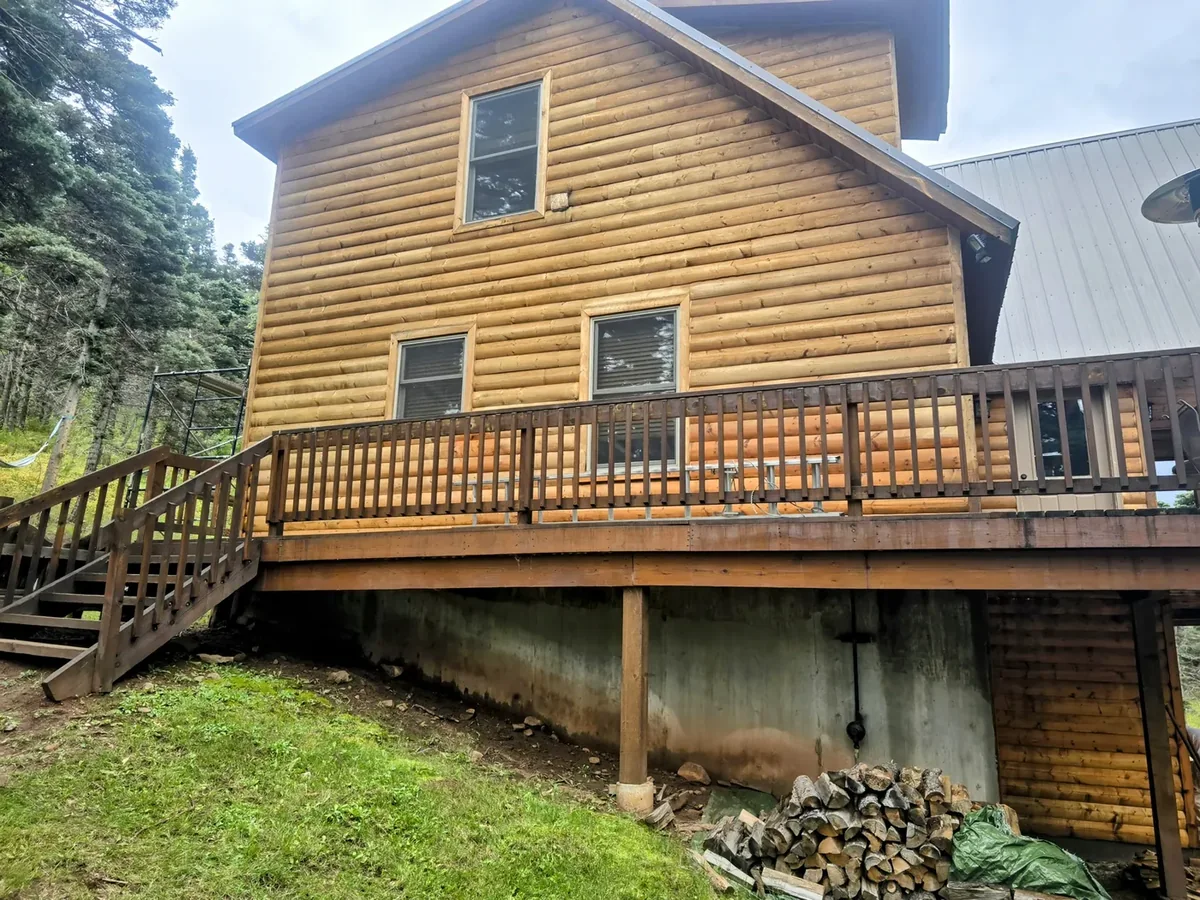
A restoration is the big lift. Staying ahead of wear with periodic maintenance coats is the easy part, and it's what keeps you from ever needing another full restoration.
Whether your cabin needs a full blast-and-restain or just fresh chinking and a maintenance coat, we'll assess it in person and lay out a clear plan and price.
For most restorations we use media blasting, often with a soft, biodegradable medium like crushed corn cob or ground glass, to lift failed stain, mildew, and UV-grayed wood fibers without gouging the logs. Blasting reaches into the checks and profile of the log far better than sanding, and it leaves a clean, uniform surface that a new stain system can bond to.
Chinking is the flexible sealant between and around logs that blocks air and water infiltration. Along with backer rod and energy-seal caulking at checks and joints, it keeps your log walls tight, cuts drafts, and lowers heating bills. If your existing chinking is cracked, pulling away, or missing, resealing is one of the highest-value parts of a restoration.
Borate is a wood preservative applied to bare logs after blasting. It penetrates the wood and protects against wood-boring insects, fungal decay, and rot. Because the logs are exposed and receptive during a restoration, it's the ideal moment to add this long-term defense before the stain system goes on.
Usually, yes. Localized rot is often addressed with epoxy consolidation and fill, or by cutting out and replacing the damaged section with matching timber, a technique sometimes called a half-log or dutchman repair. Full log replacement is reserved for severe structural damage. We assess the extent, explain the options, and repair only what genuinely needs it.
It varies by exposure, but a maintenance coat every three to five years on the sun-facing and weather-facing walls is typical in our mountains. Staying on that schedule refreshes the stain before it fails, which protects your investment and avoids the far larger cost of another full blast-and-restain down the road.
Drag the handle to compare a set of log walls before and after a full restoration.
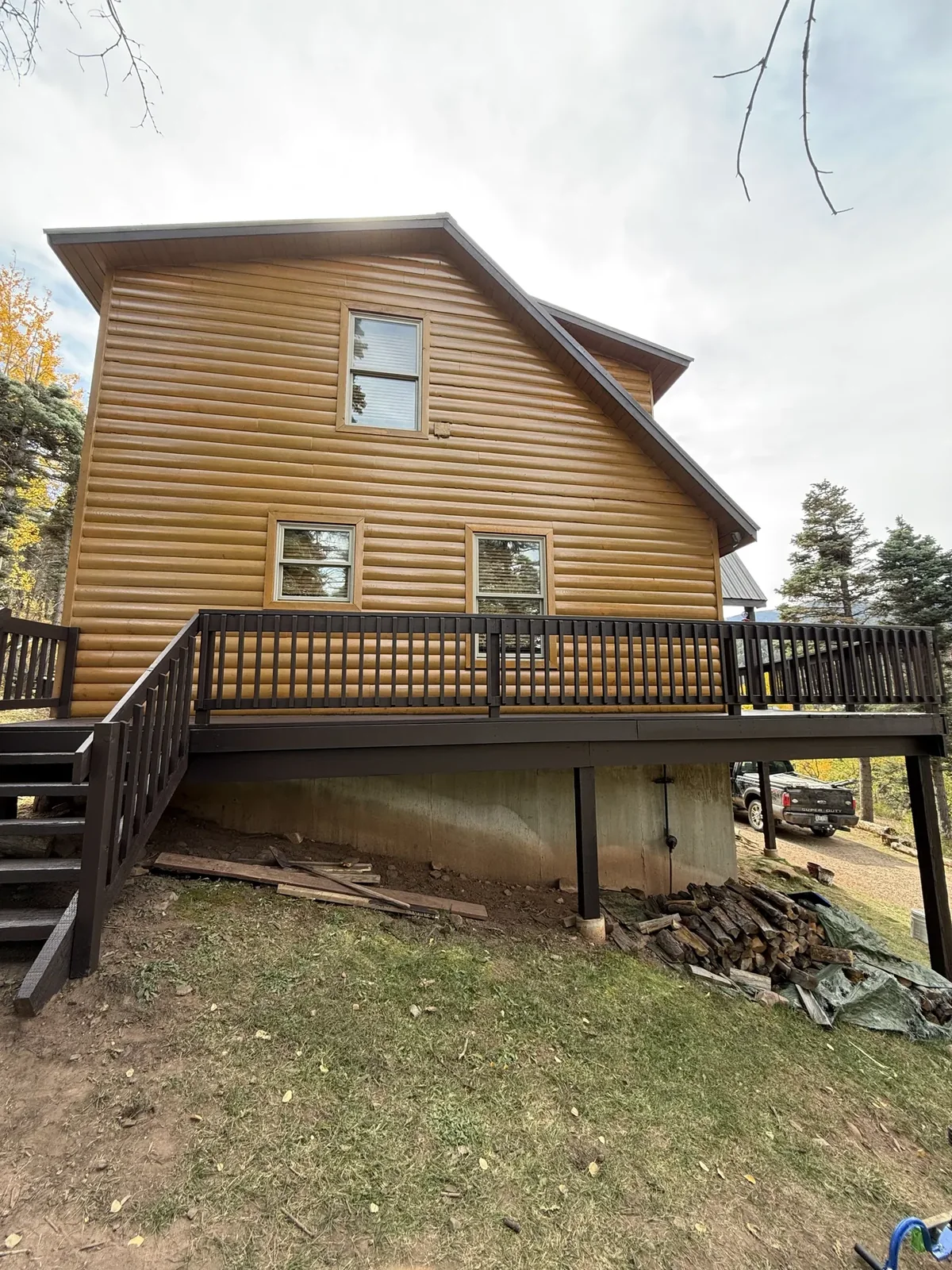
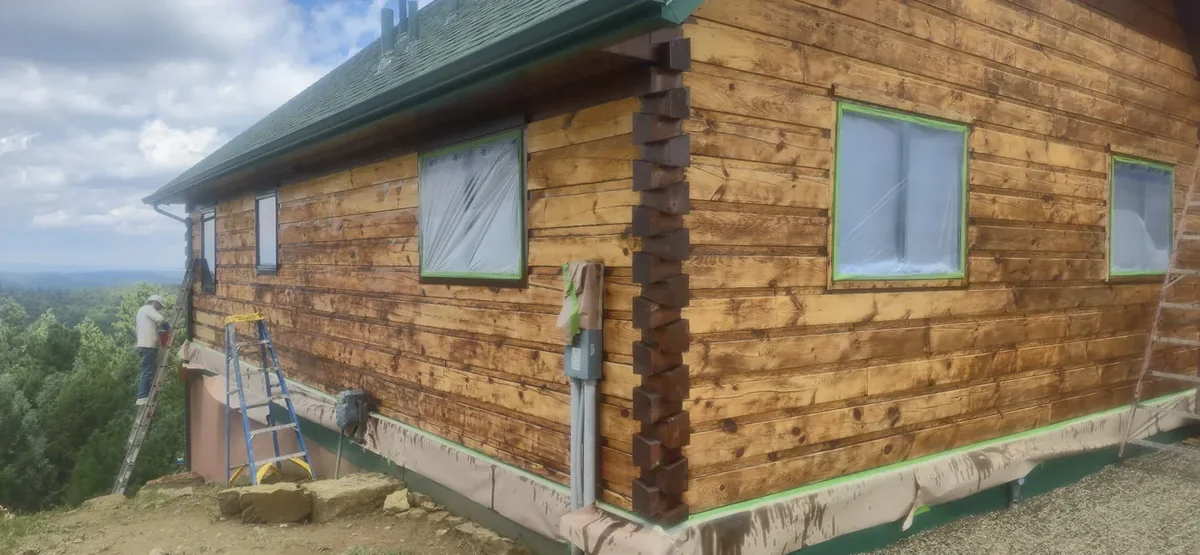
Log home restoration: when to re-stain, chink, and reseal. How to read the warning signs and plan the work before small problems become big ones.