
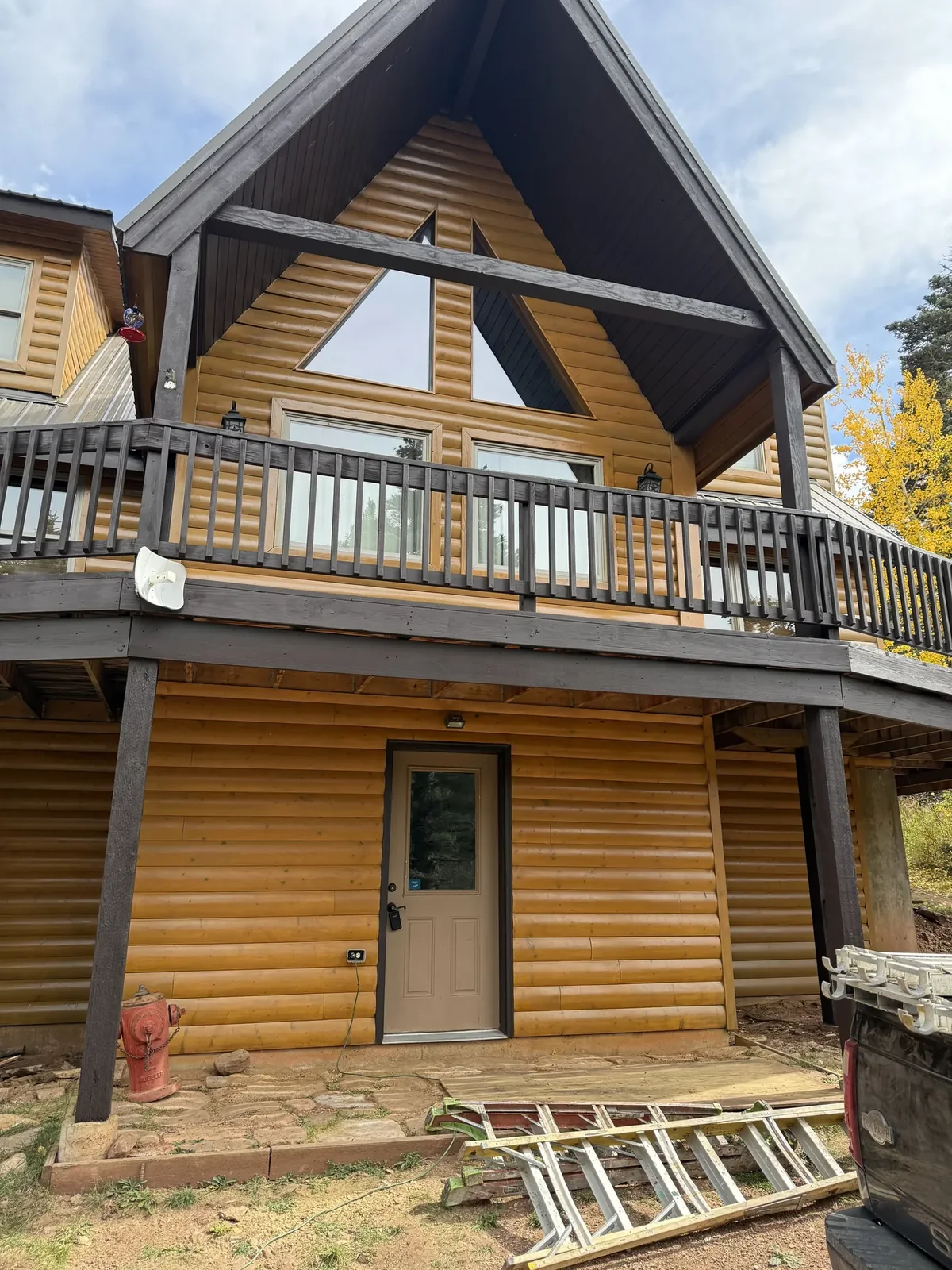
A log home is one of the best-looking places you can live in the southern Colorado mountains, and one of the least forgiving if you ignore its finish. The stain and sealant on your walls are the only thing standing between raw timber and relentless UV, wind-driven snow, and freeze-thaw cycles. Catch a failing finish early and a maintenance coat handles it. Miss it, and you are looking at a full blast-and-restain instead. Here is how to tell where you stand.
Signs the finish is failing
Log finishes rarely fail all at once. They give you a season or two of warning if you know what to watch for. Walk the perimeter on a clear day and look closely, especially at the south and west walls that take the most sun.
Graying and fading
When the pigment burns off, the wood underneath turns a dull silver-gray. That gray is not just cosmetic: it is UV breaking down the surface fibers. A patchy, washed-out look on the sunny walls means the stain is no longer shielding the wood.
Water no longer beads
Splash a little water on a log. On a healthy finish it beads and rolls off. If it soaks in and darkens the wood, the sealant has worn through and moisture is getting into the timber: the first step toward rot.
Cracking, peeling, and chinking gaps
Film-forming finishes can crack or peel as they age, and the checks in the logs open and close with the seasons. Look for chinking that has pulled away, cracked, or fallen out, and caulk lines that have split at the joints. Those gaps are exactly where snowmelt gets in.
What a full restoration actually involves
When the finish is past a maintenance coat, restoration rebuilds the whole protective system from the wood out. Order matters: each step sets up the next.
- Media blasting or washing. Failed stain and gray fibers are blasted back to sound, bright wood with a soft medium like crushed corn cob, or washed and prepped where blasting is not needed.
- Borate treatment. With the logs bare and receptive, a borate preservative soaks in to defend against wood-boring insects and fungal decay.
- Chinking, caulking, and energy seal. Backer rod, fresh chinking, and energy-seal caulking close the gaps between logs and the checks that let air and water in.
- Stain system. A film-forming or penetrating log stain goes on in coordinated coats for color and protection.
- Clear top coat. A sacrificial clear layer adds UV defense and makes the next maintenance coat far easier.
Film-forming vs. penetrating stain
Film-forming systems build a durable, breathable layer on the surface for the most uniform look and the longest stretch between full recoats. Penetrating systems soak in and wear by thinning rather than peeling, which keeps future coats simple. The right pick depends on your logs, your exposure, and how you like to maintain them. There is a fuller breakdown on our log home restoration page.
How often to re-coat
Once the system is sound, a maintenance coat every three to five years on the sun- and weather-facing walls is typical in our mountains. Shaded north walls can go longer. The goal is to refresh the stain before it fails, because a timely maintenance coat is a fraction of the cost and disruption of another full restoration.
Why our climate is so hard on logs
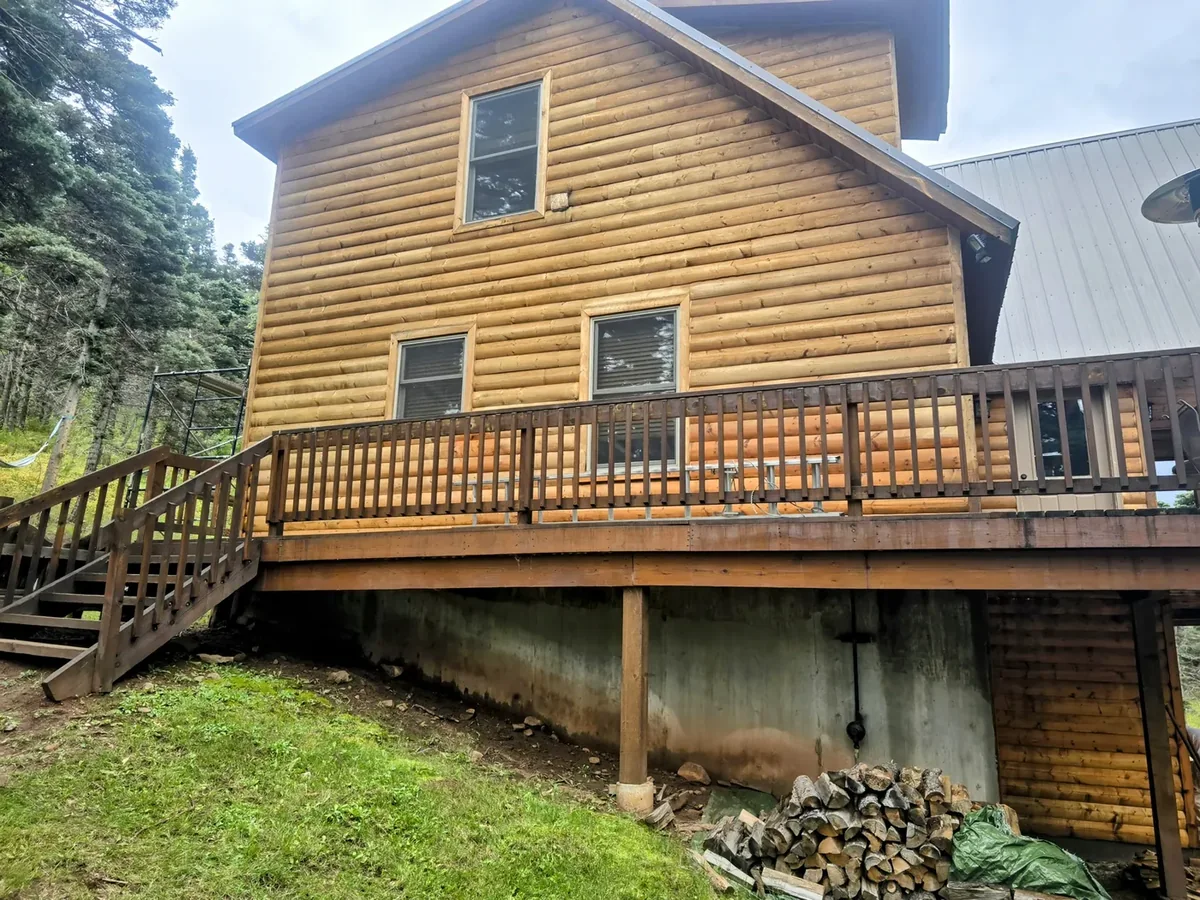
At six thousand feet and up, the sun is measurably more intense, and it degrades unprotected wood faster than it would at lower elevation. Snow banks up against the lower courses and melts straight into any unsealed check. Then the temperature swings through freeze-thaw dozens of times a season, driving that moisture deeper and widening every crack. It is the same weather that drives our advice on choosing exterior paint for Colorado's climate. Up here, prep and the right coating system are not optional.
DIY or hire it out?
A homeowner with time and the right ladder can absolutely handle a maintenance coat: wash the walls, let them dry fully, spot-check the chinking, and brush on a fresh coat of the same product. Where it gets beyond a weekend project is a full restoration: blasting, borate, rot repair, and coordinating a multi-coat stain system on two-story walls is specialized, physical work, and mistakes get sealed into the logs for years. If the finish has grayed out, water is soaking in, or the chinking is failing, that is the point to bring in a crew that does this in exactly this climate.
Not sure which camp your home is in? Send us a few photos or request a free estimate and we will tell you honestly whether you need a maintenance coat or a full restoration.