
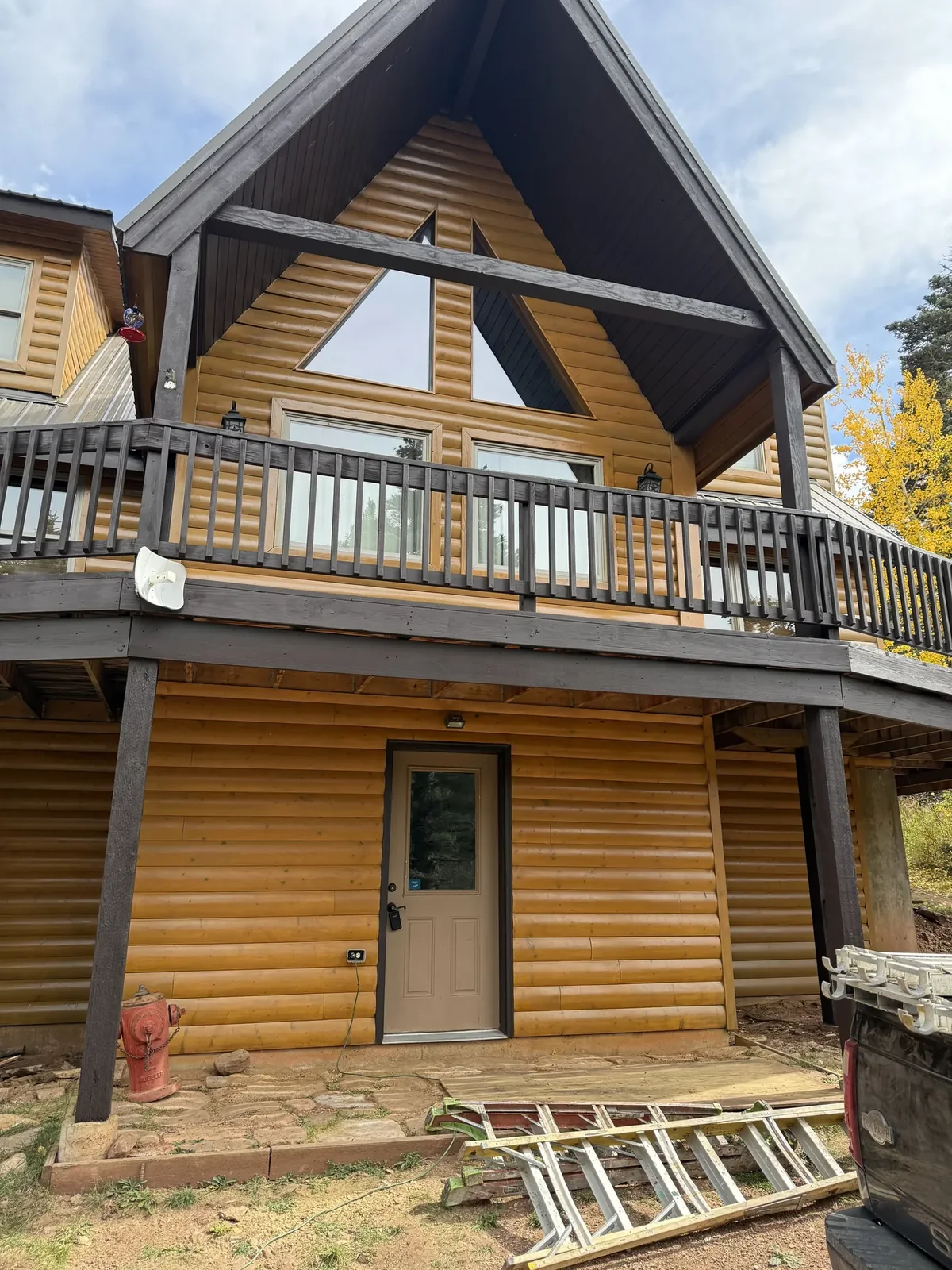
A log home protects itself as long as its finish and seals are intact. The trouble is that both fail slowly, and by the time damage is obvious it is usually well underway inside the wood. The good news: logs give plenty of warning if you know what to look for. Take ten minutes on a clear day, walk the full perimeter, and pay special attention to the south and west walls that catch the most sun and weather. Here are the five signs that tell you it is time to act.
1. The logs have grayed or faded
What to look for: a dull, silvery-gray or washed-out tone, usually starting on the sunny elevations while shaded walls still hold their color.
Why it matters: that gray is not just a faded look: it is UV breaking down the surface fibers of the wood itself. Once the pigment burns off, the stain is no longer shielding the timber, and the surface starts to erode.
What to do: if the color has gone patchy but the wood is still sound, you may be able to clean and re-coat before the damage goes deeper. If the gray is widespread and the surface feels fuzzy or roughened, the wood likely needs to be blasted or sanded back to bright fibers first.
2. Water no longer beads on the walls
What to look for: splash a cup of water on a dry, sun-facing log. On a healthy finish it beads and runs off. If it soaks in and darkens the wood, the sealant has worn through.
Why it matters: beading is the whole job of the finish. Once water is absorbing instead of shedding, moisture is reaching bare timber every time it rains or the snow melts, and moisture in the wood is the first step toward rot.
What to do: a failed bead test on otherwise sound logs is your cue to schedule a maintenance coat soon. Our guide on how often to restain a log home covers how to read the intervals wall by wall.
3. Checks and cracks are holding moisture
What to look for: checking is the natural cracking that runs along a log as it seasons. The problem ones are the upward-facing checks that collect water, and any crack that stays dark and damp long after the surface has dried.
Why it matters: an open, upward check is a funnel that carries snowmelt straight into the core of the log, where it can sit and rot from the inside out. Freeze-thaw cycles then widen the crack a little more each season.
What to do: checks wider than a pencil, especially on horizontal or upward faces, should be cleaned out and sealed with backer rod and a flexible energy-seal caulk as part of the finish system, not simply painted over.
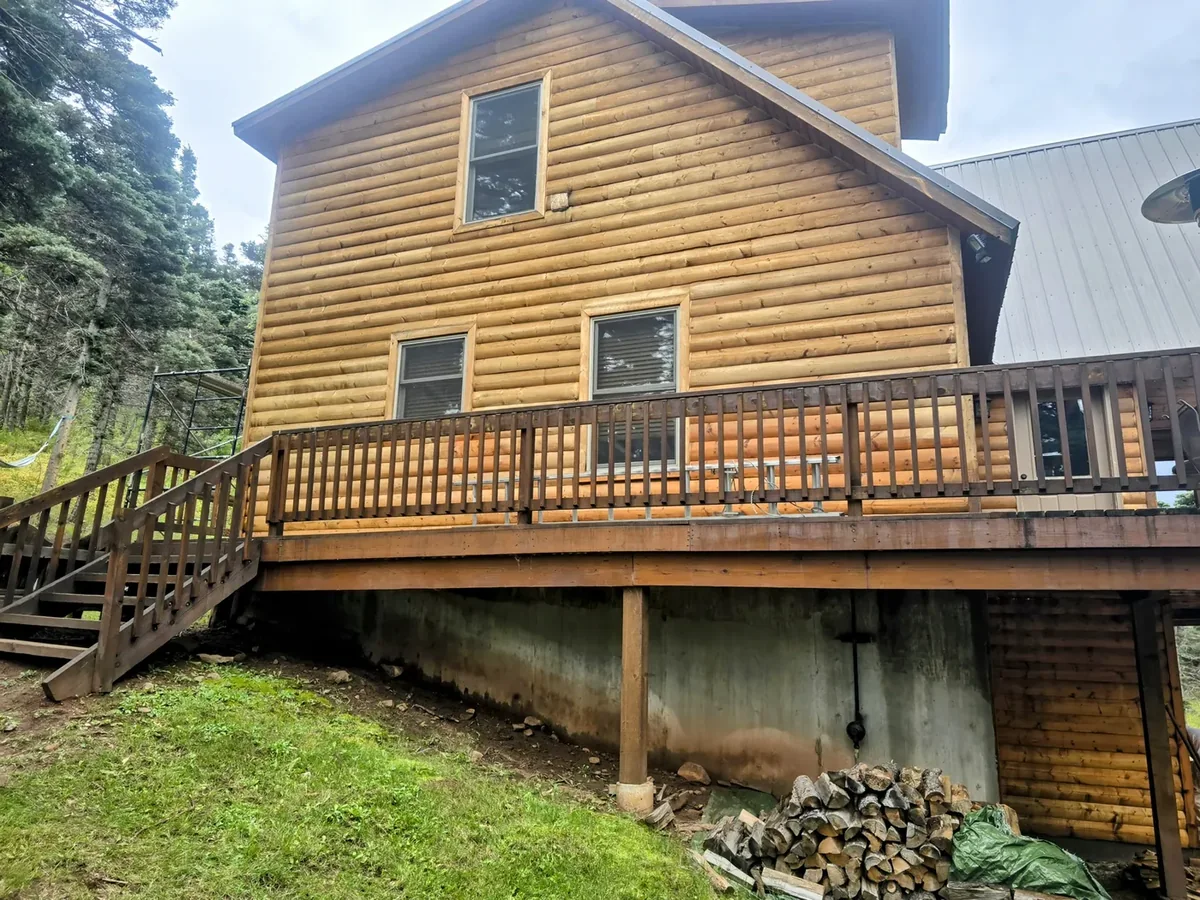
4. The chinking is cracked, pulling away, or missing
What to look for: run your eye along the joints between logs. Failing chinking looks like hairline cracks, sections that have pulled loose from the wood on one edge, crumbling patches, or gaps where it has fallen out entirely.
Why it matters: chinking and caulking are your weather seal. When a joint splits, it lets in drafts, wind-driven rain, and snowmelt, and it drives up heating bills at the same time. A single failed run of chinking can feed water into a wall for years before anyone notices the stain inside.
What to do: small, localized failures can be cut out and re-chinked. Widespread cracking usually means the whole seal system is at the end of its life and should be redone alongside a re-stain. The full sequence is laid out in our log home restoration guide.
5. Soft spots, early rot, or insect activity
What to look for: press a screwdriver or an awl into suspect areas: lower courses near grade, under-window sills, the base of upward checks. Sound wood resists; punky wood gives way and feels spongy. Watch also for small round exit holes, sawdust-like frass, or a hollow sound when you tap.
Why it matters: this is the sign you cannot ignore. Soft wood means decay is already active, and boring insects can turn a structural log into shell. Left alone, a maintenance issue becomes a repair-or-replace issue.
What to do: this is the point to bring in a crew. Restoration at this stage means cutting out and repairing failed sections, treating the bare wood with a borate preservative against fungus and insects, then rebuilding the seal and stain system so it does not come back.
How many signs add up to a restoration?
One early warning (say, water no longer beading) often means a straightforward maintenance coat. Several signs together, or any soft wood at all, point to a full restoration: blasting back to bright timber, borate treatment, fresh chinking, and a rebuilt multi-coat finish. The earlier you catch it, the smaller and cheaper the fix. Colorado's high-altitude sun and freeze-thaw cycles are relentless, so what looks minor in the spring can widen fast by fall.
Related services
We handle log home restoration across Walsenburg, Huerfano County, and southern Colorado: from seasonal maintenance coats to full blast-and-restain projects, chinking and caulking, and the rot repair that sometimes comes with it. If your walk-around turned up two or three of these signs, a walkthrough is the fastest way to know which fix you actually need.
Spotted something on your own logs? Send us a few photos or request a free estimate and we will give you an honest read on whether it is a quick coat or a full restoration.