
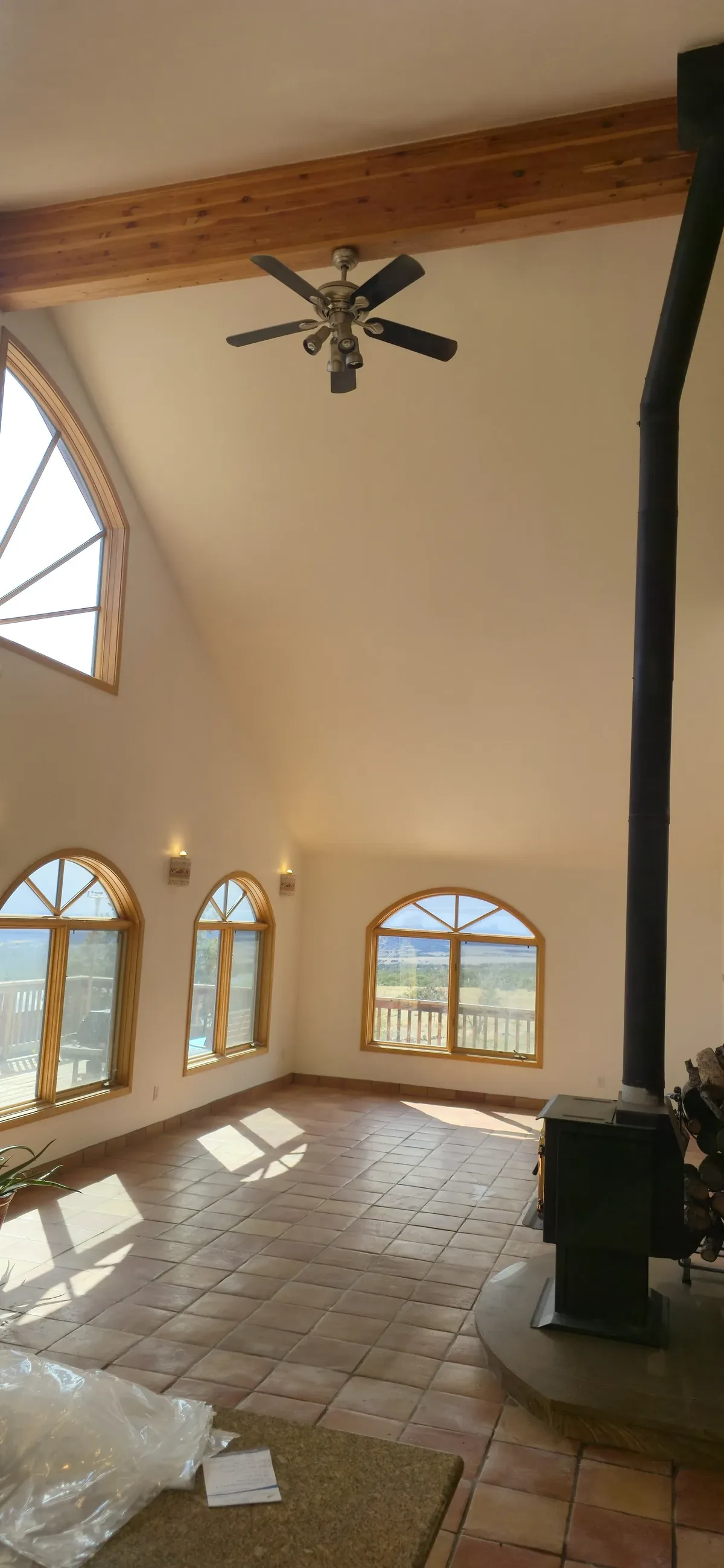
Every year around the end of September the calls change. People who were thinking about their siding realize they have run out of runway, and the honest answer is usually yes, that one waits until spring. We have written before about when the exterior season actually opens and closes here, and the short version is that once night temperatures stop cooperating, exterior coatings stop curing properly and there is no getting around it.
What gets missed in that conversation is the other half. Exterior season closing does not mean painting season closing. It means the work moves indoors, and a Colorado winter is genuinely one of the better times of year to do interior work. Not a consolation prize. Better.
Dry winter air is an advantage, not a problem
People assume summer is the right time to paint inside because you can open the windows. It is worth questioning that.
Paint dries by losing water to the air, and how fast that happens depends on how much moisture the air is already carrying. A humid July afternoon slows everything down. Coats stay tacky longer, you wait longer between them, and in bad conditions you get poor adhesion or bubbling because the film skinned over before the layer underneath had released its moisture.
Our winters are dry. Genuinely, aggressively dry. That means faster and more even flash-off between coats, and a two coat job that might stretch across two days in a humid climate often finishes cleanly in one. The ideal indoor range for this work is roughly 40 to 50 percent relative humidity, and a heated southern Colorado house in January frequently sits right in that band or below it without anyone doing anything.
What does matter is temperature, and it is easy to manage. Most water-based interior products want the room between about 50 and 85 degrees during application and while the coating dries, which is simply room temperature. The thing to watch is not the thermostat during the day but the overnight setback. Dropping a freshly painted room to 45 degrees at two in the morning is where problems come from, so we ask people to hold the heat steady for a day or two after we coat.
The ventilation question, honestly answered
The real objection to winter interior painting is not technical, it is "I do not want to live in a house full of paint fumes with the windows shut."
That concern made sense twenty years ago. It applies much less now. Low-VOC interior products are generally under 50 grams per liter and zero-VOC lines are under 5, and at those levels normal HVAC circulation in a closed house is adequate. The strong solvent smell people remember belongs to older oil-based formulations that are no longer standard for interior wall work.
We default to low-odor, low-VOC products on interior jobs anyway, and in winter that is not a preference, it is the whole reason the work is comfortable. It matters more here than in a mild climate, because a tightly sealed house at seven thousand feet in January is not a house where you can crack every window for an afternoon.
There is one honest caveat. Cabinet and trim enamels, which are the harder-wearing products, have more odor than wall paint. For those we manage airflow more deliberately, work in sequence so the whole house is never affected at once, and talk through the schedule with you in advance.
What belongs on the winter schedule
Interior repaints
The obvious one. Walls, ceilings, trim, doors, and closets, done room by room so you keep living in the house. Winter is also when you are actually inside looking at your walls, which is why January is when people notice that the hallway has needed attention for three years.
Cabinets
Kitchen and bath cabinetry is close to ideal cold-weather work. Doors come off and get sprayed flat in a controlled space, and the dry indoor air helps the enamel level out and set up properly. It is also a job you do not want rushed, and winter schedules have more room in them than the July crunch. There is a fuller breakdown in our post on whether to refinish or replace your cabinets.
Drywall repair and texture
Settling cracks, nail pops, water stains from last spring, and the patch somebody put in badly two years ago. Compound needs warmth and dry air to set correctly, and a heated house in winter provides both more reliably than a damp shoulder season. This work almost always pairs with paint, which is the only way a repair truly disappears. We covered the reasons for that in the post on visible patches and flashing, and we handle repair, patching, and texture matching as part of the same job rather than handing it off.
Tile
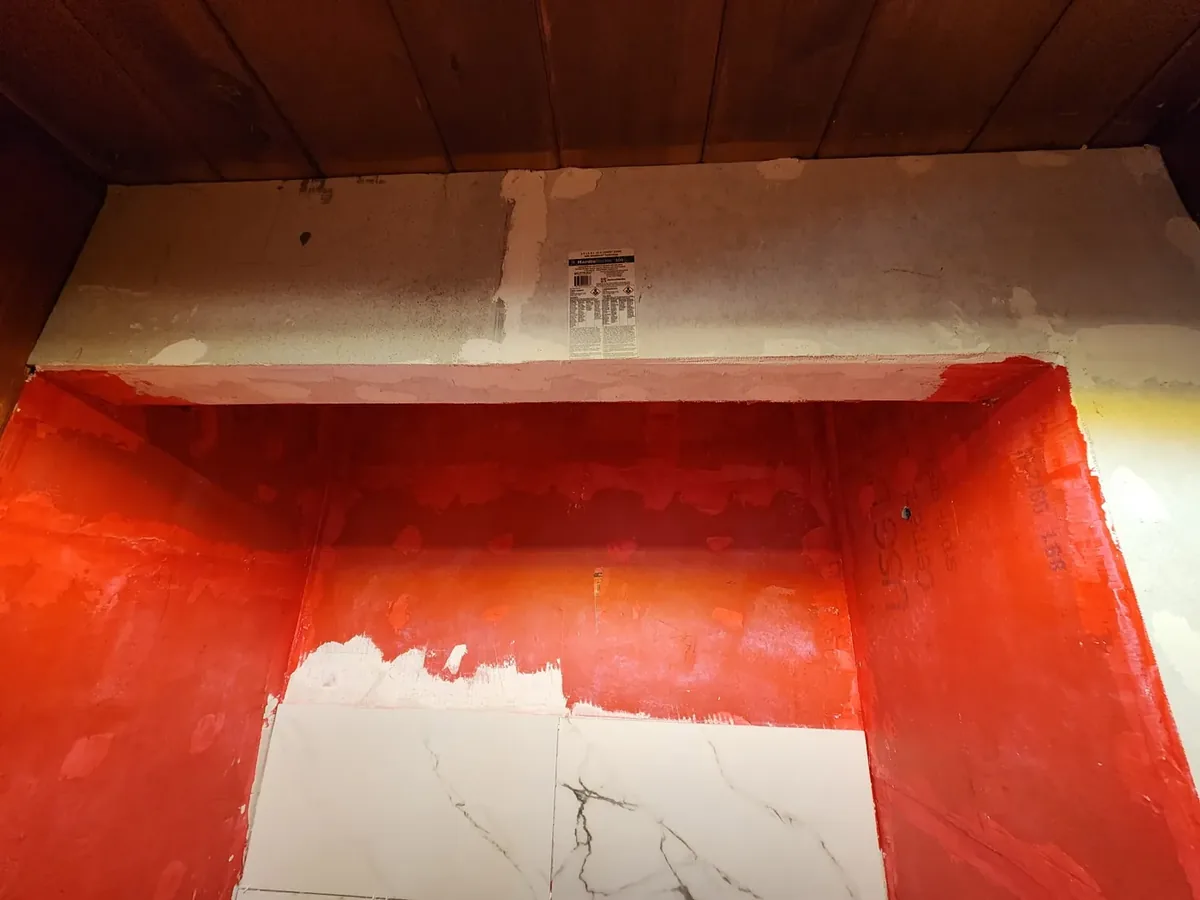
Entryways, mudrooms, bath surrounds, and backsplashes. In a mountain house the entry floor takes a genuine beating from snowmelt, road sand, and boots, and winter is when you find out whether what is down there is working. Setting materials cure fine indoors at room temperature, and there is no weather dependency at all. Tile setting slots into the cold months cleanly.
The interior side of a spring exterior project
If you already know the outside is getting done in May, the interior trim and the rooms behind those windows can be handled now, so spring is one job instead of two.
The scheduling argument, which is the real one
Here is the part that matters most and gets discussed least.
From May through September every painting contractor in southern Colorado is running flat out on exterior work, because the window is short and everybody knows it. Booking an interior job in July means competing for time against a calendar that is already full, and it means accepting whatever week is left.
November through March is the opposite. You pick the week. You get more of the owner's attention on your project. And because the crew is not trying to chase daylight and beat an afternoon storm, the pace is set by the work rather than by the weather.
For an owner-operated outfit like ours that is not a small difference. Winter work is what keeps a small crew steady through the off months, which is precisely why it gets scheduled carefully rather than squeezed in.
What genuinely does have to wait
We are not going to pretend everything works in February. Being straight about the limits:
- Exterior painting and staining. Surface temperature and overnight lows govern this, and no amount of wanting it done changes the chemistry.
- Deck work. Same problem, plus the boards need to be dry, and a deck under snow is not dry. Spring, every time.
- Log home exterior work. Blasting, chinking, and staining all have temperature windows. Chinking in particular wants the wall to stay in range while it cures, which our winters do not allow.
- Unheated spaces. A detached garage or an outbuilding without heat is effectively exterior work, whatever side of the wall you are standing on.
What is worth doing in winter for any of that is the walkthrough. Getting an exterior project scoped and on the calendar in February means you are at the front of the queue in May rather than calling when everyone else does.
Booking the cold months
If you have been putting off a room, a kitchen, or a repair that has annoyed you since last spring, this is the season for it. Interior work, cabinets, drywall, and tile all run right through, and the calendar is more flexible now than it will be at any point next summer.
Want to get something on the winter schedule? Request a free estimate and we will come look while the getting is good.